

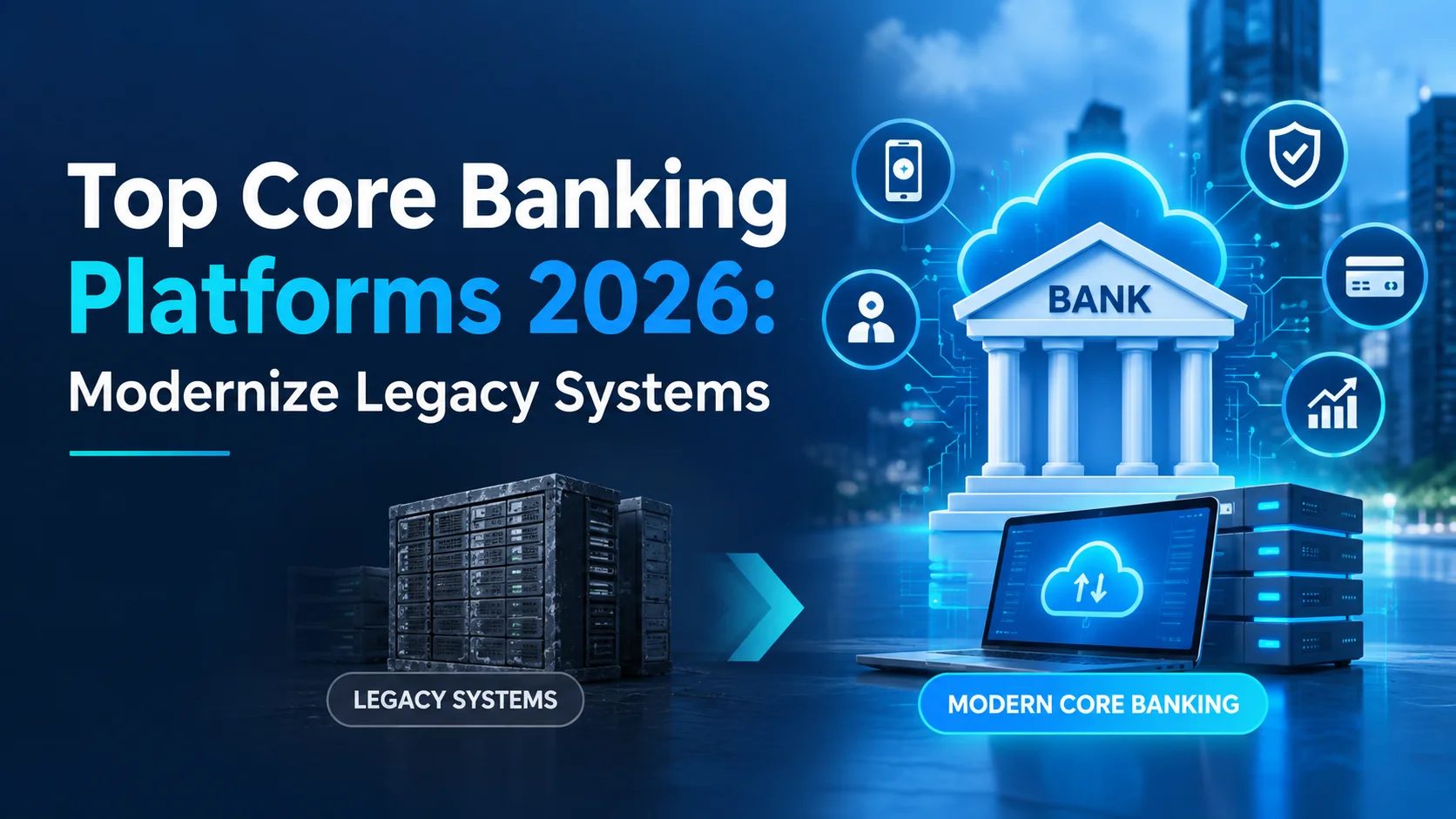
Selecting the right core banking software is one of the most critical decisions a financial institution will ever make. Whether you are operating a legacy retail bank modernising its stack, a credit union expanding digital capabilities, or a fast-growing digital bank looking for a cloud-native engine, your core banking platform sits at the absolute center of your operational ecosystem.
It handles accounts, general ledgers, interest calculations, loan processing, transactions, and regulatory compliance, serving as the single source of truth across every digital channel, branch, and API. In 2026, the core banking ecosystem reached a major turning point. Institutions are rapidly moving away from expensive, inflexible mainframe-based legacy cores toward modular, API-driven, and cloud-native solutions.
This comprehensive guide breaks down the top core banking software providers, compares cloud-native vs. enterprise systems, outlines features, costs, and reviews, and evaluates the best alternatives for platforms like Temenos and Mambu.
Quick Comparison: Top Core Banking Software Platforms
| Platform | Core Architecture | Primary Best-Fit Audience | Key Differentiator |
| Mambu | Cloud-native SaaS | Neobanks, fintech lenders, digital-first banks | Fast time-to-market, composable SaaS model |
| Thought Machine (Vault Core) | Cloud-Native (Microservices) | Large banks seeking custom product controls | Smart contract-style logic for complex product builds |
| Tenemos Transact | Enterprise Cloud / On-Prem | Tier-1 & Tier-2 global banks modernizing legacy stacks | Broadest international regulatory and product footprint |
| Finacle (Infosys) | Modular Cloud-Enabled | Universal global banks, enterprise retail & corporate | High scalability with deep AI and analytics integrations |
| Oracle FLEXCUBE | Enterprise Cloud / On-Prem | Multinational and universal banking networks | Built-in multi-currency, multi-entity regional compliance |
| Finxact (Fiserv) | Cloud-native | U.S. Commercial banks, challenger banks, credit unions | Real-time POS/lending transaction engine optimized for US |
| Finastra (Essentis/Fusion) | Hybrid Cloud / Enterprise | Regional banks wanting core, lending & treasury in one | Broad open-banking marketplace and ecosystem |
| TCS BancS | Modular Enterprise | Large institutions needing banking + capital markets | Integrated securities, wealth, and banking capabilities |
Understanding Core Banking Architecture: Legacy vs. Cloud-Native
Before evaluating specific core banking software vendors, it is essential to understand the architectural shift taking place in financial technology:
| LEGACY MAINFRAME ENGINE |
| Monolithic Architecture • Batch Processing • High Maintenance TCO |
+———————————————————————————–+
|
v
+———————————————————————————–+
| MODERN CLOUD-NATIVE CORE ENGINE |
| Microservices & Containers • Real-Time Ledger • API-First & Composable SaaS |
+———————————————————————————–+
1. Mainframe-Based Legacy Cores
Older core banking systems and traditional legacy platforms rely on nightly batch processing and monolithic codebases. While stable, they make launching new products slow and expensive.
2. Modern Core Engines to Replace Mainframe-Based Banking Systems
Modern core banking platforms (such as Thought Machine, Mambu, and Finxact) use microservices, event-driven architectures, and open APIs. They enable instant, real-time transaction balances, 24/7 uptime, and rapid integration with third-party fintech tools.
Detailed Analysis of Top Core Banking Software Providers (2026)
Choosing a core banking platform is not just an IT upgrade; it is a long-term strategic decision. To help you evaluate the best fit, here is a deep-dive analysis of the market’s top modern engines and traditional enterprise giants.
[ Greenfield / Neobanks ] —> SaaS & Composable Core (Mambu, Thought Machine)
[ Tier-1 Legacy Banks ] —> Enterprise Clouds (Temenos, Oracle, Finacle)
[ Credit Unions & CUs ] —> Localized Systems (Jack Henry, FIS, Fiserv)
1. Mambu – Best SaaS Core Banking Engine for Fintechs & Lenders
Mambu pioneered the concept of “composable banking,” the philosophy that a bank should build its tech stack like Lego blocks instead of buying an all-in-one rigid system. It acts as a pure, cloud-native record-keeping engine while letting you plug in best-of-breed third-party solutions for loan origination, KYC, credit scoring, and payment gateways via RESTful APIs.
- Target Audience: Neobanks, challenger banks, fintech lenders, BNPL (Buy Now Pay Later) providers, and digital deposit brands.
- Core Strengths & Features:
- API-First Architecture: Out-of-the-box connectors for modern tools (like Sumsub, Stripe, Plaid).
- Model Context Protocol (MCP) Integration: Built-in AI adapter layer allowing enterprise AI agents to query portfolio data and execute workflows directly against the core.
- Low-Code Product Builder: Non-technical product teams can configure interest structures, fee models, and repayment schedules within minutes.
- Pros:
- Ultra-fast time-to-market (go live in weeks/months instead of years).
- Zero hardware maintenance; cloud infrastructure is fully managed by Mambu.
- Cons:
- Subscription fees scale directly with transaction volume, which can become expensive for massive Tier-1 retail deposit volumes.
- Lack of built-in deep trade finance or complex corporate treasury tools (requires third-party integrations).
Top Alternatives to Mambu for SaaS Core Banking
- Thought Machine (Vault Core): Best if you need complete code-level control over smart contracts rather than low-code user interfaces.
- FinXact (by Fiserv): The top cloud-native alternative specifically built for U.S. commercial banks needing real-time POS processing.
- SaaScada / Skaleet: Highly cost-effective SaaS alternative for regional fintechs and niche credit providers in emerging markets.
2. Temenos Transact (Best Core Banking Engine for Large Enterprise Banks)
Temenos Transact (formerly T24) is an enterprise juggernaut powering thousands of global institutions. It covers the widest operational spectrum in the industry, ranging from retail banking and wealth management to multi-currency corporate treasury.
- Target Audience: Tier-1 and Tier-2 universal banks, global enterprise networks, and institutions replacing multi-decade legacy mainframes.
- Core Strengths & Features:
- Global Localization: Pre-configured compliance frameworks and tax rules for over 150 countries.
- Composable Modernization Routes: Banks can upgrade incrementally, replacing payments or lending modules first without ripping out the entire core all at once.
- Temenos Copilot: Native generative AI assistants built specifically to automate sanctions screening, fraud mitigation, and operational compliance workflows.
- Pros:
- Proven stability at massive scale (handles millions of complex concurrent transactions).
- Comprehensive end-to-end functionality across every asset class.
- Cons:
- Extremely high total cost of ownership (TCO) and heavy implementation consultancy fees.
- Long migration cycles (often taking 12 to 36 months for full deployment).
Popular Temenos Alternatives
- Oracle FLEXCUBE: Top pick for banks that already run their entire data warehouse on Oracle enterprise hardware.
- Infosys Finacle: Modular alternative known for industry-leading throughput speeds and digital engagement tools.
- TCS BaNCS: Excellent for mega-banks that operate retail banking alongside securities trading and asset management.
3. Thought Machine (Vault Core)
Thought Machine was built from a clean slate by former Google engineers to solve the rigidity of traditional banking engines. Its core innovation is “Smart Contracts”, writing financial products (loans, mortgages, savings accounts) directly in Python code.
- Target Audience: Enterprise banks launching separate “greenfield” digital brands, tech-heavy challenger banks, and Tier-1 institutions requiring high customizability.
- Core Strengths & Features:
- Smart Contract Logic: Every financial product behaves exactly as programmed in code, removing the constraints of pre-built product menus.
- Microservice Architecture: Zero shared state between services, allowing infinite horizontal scaling on AWS, Azure, or GCP.
- Real-Time Single-Engine Ledger: Handles both retail deposits and complex corporate credit products on a single real-time ledger.
- Pros:
- Ultimate design freedom: you can invent entirely new financial products without touching the core engine platform.
- Native cloud performance with absolute real-time ledger updates.
- Cons:
- High engineering overhead, and requires skilled internal software developers who can write, test, and maintain product scripts.
4. Infosys Finacle
Part of EdgeVerve, Finacle is an enterprise powerhouse supporting over 1 billion end-customers worldwide. The platform is designed to bridge traditional retail operations with modern open-banking ecosystems.
- Target Audience: Large commercial banks, universal retail banks, and rapidly expanding regional institutions across Asia, Europe, and the Americas.
- Core Strengths & Features:
- AI-First Banking: Built-in predictive analytics engine for customer churn prediction, automated cross-selling, and credit risk assessment.
- High Throughput Processing: Designed to effortlessly handle massive transaction surges during peak shopping or holiday events.
- Open Banking Native: Pre-built suite of hundreds of open APIs ready for developer consumption.
- Pros:
- Highly reliable track record in high-volume consumer banking markets.
- Strong flexibility through modular deployment options.
- Cons:
- System upgrades across heavily customized environments require specialized vendor integration support.
5. Oracle FLEXCUBE
Oracle FLEXCUBE is a massive, highly structured core banking suite engineered for multinational banks that need seamless cross-border capabilities, multi-entity support, and deep corporate banking features.
- Target Audience: Global banking groups, corporate financial institutions, and private wealth banks operating across multiple legal jurisdictions.
- Core Strengths & Features:
- Advanced Corporate Banking: Built-in trade finance, supply chain finance, structured lending, and cash management modules.
- Multi-Currency & Multi-Entity: Manages balance sheets across different countries, currencies, and tax regimes within a single deployment.
- Oracle Ecosystem Synergy: Unmatched native integration with Oracle Autonomous Databases and Oracle Cloud Infrastructure (OCI).
- Pros:
- Out-of-the-box support for complex corporate banking and cross-border trade operations.
- High-grade enterprise data security and audit controls.
- Cons:
- Steep learning curve and complex administration requirement for non-Oracle IT teams.
Specialized Options: Top Core Banking Providers for Credit Unions & Community Banks
Global enterprise cores are often too heavy and complex for regional institutions. Community banks and credit unions (CUs) need pre-packaged regulatory reporting, local payment rail access (ACH, FedNow, SWIFT), and high-touch support out-of-the-box.
+———————————————————————–+
| COMMUNITY BANK & CREDIT UNION CORES |
| |
| [ Jack Henry ] ==> High-touch support, deep US local compliance |
| [ FIS Core ] ==> Scalable options for mid-market CUs |
| [ Fiserv Core ] ==> Integrated card processing & digital banking |
- Jack Henry & Associates: The primary market leader in the U.S. for community institutions. Known for exceptional relationship best management, out-of-the-box U.S. regulatory reporting, and seamless integration with local clearing houses.
- FIS (Profile / CoreDirector / Horizon): Offers versatile, highly stable core options tailored specifically for regional banks and credit unions that want modular growth without enterprise-level friction.
- Fiserv (Premier / Cleartouch / DNA): Extremely popular across U.S. banks due to its unified ecosystem connecting core accounting directly with debit/credit card issuance, merchant processing, and digital banking apps.
Specialized Options: Top Core Banking Providers for Credit Unions & Community Banks
Small banks, community banks, and credit unions have unique operational requirements compared to global Tier-1 institutions. They require localised regulatory compliance, out-of-the-box reporting, and cost-effective maintenance.
- Jack Henry & Associates: A market leader in the U.S. for community banks and credit unions, offering high-touch local support and integrated payment processing.
- FIS (Profile / CoreDirector): Offers scalable core options specifically tailored for community-scale operations and regional credit unions.
- Fiserv (Premier / Cleartouch): Deeply entrenched across U.S. financial institutions with broad digital banking and card processing ecosystems.
Key Features to Evaluate in the Best Core Banking Systems (2026 Edition)
When evaluating core banking system software, prioritize these essentials:
1. Real-Time Ledger & Balance Engine: 24/7 processing without batch windows.
Ensure core updates account balances instantly across all digital channels, branch locations, and ATM networks in real-time.
2. Open API & Developer Portal: Connect payment rails, KYC, and CRMs effortlessly.
A modern core must provide RESTful APIs and webhooks to integrate third-party fintech capabilities (e.g., Sumsub for KYC, Plaid for account linking, Stripe for processing).
3. Cloud-Native Architecture: Zero downtime during updates.
Looking for containerised microservices (Docker/Kubernetes) deployed on AWS, Azure, or Google Cloud for elastic scaling.
4. Flexible Product Engine: Launch new deposit and credit products in days.
The platform should allow non-developers or product managers to adjust interest rates, fee structures, and repayment schedules without deep coding.
5. Security & Compliance Infrastructure: Automated KYC, AML, and regulatory reporting.
Built-in security frameworks adhering to PCI-DSS Level 1, SOC2 Type II, ISO 27001, and local banking laws.
Cost Analysis: How Much Does a Core Banking System Cost?
One of the most frequent questions from fintech founders and banking executives is: How much does a core banking system cost?
Pricing models vary widely based on institution size, deployment model, and transaction volumes:
| Core Banking Tier | Target Audience | Typical Initial Implementation | Estimated Annual License / SaaS Fee |
| Startup / Fintech Core (SaaS) | Neobanks, Digital Lenders | $50,000 – $250,000 | $100,000 – $400,000 (Usage-based) |
| Mid-Market / Credit Union | Community Banks & Credit Unions | $500,000 – $2,000,000 | $300,000 – $1,000,000 |
| Enterprise / Tier-1 Global Core | Universal & Global Banks | $5,000,000 – $50,000,000+ | $2,000,000 – $10,000,000+ |
Core Cost Components
- Software Licensing / SaaS Subscriptions: Recurring fees based on active account volume, transaction numbers, or flat module licensing.
- System Integration & Migration: Data migration from legacy systems, third-party API configurations, and custom workflow development.
- Infrastructure & Hosting: Cloud hosting charges (AWS/Azure) or physical data center server maintenance.
- Maintenance & Regulatory Updates: Ongoing vendor maintenance contracts to ensure compliance with changing regional banking laws.
How SoftwareCore Helps You Execute Your Core Banking Modernisation
Choosing the right financial banking software vendor is only half the battle. Successfully integrating, configuring, and deploying a new core banking platform without risking data loss or operational disruption requires experienced software engineering execution.
At Software Cora (https://softwarecora.com/), we help financial institutions and fintech startups bridge the gap between software selection and production deployment:
- Core Integration & API Development: We build robust API wrappers, payment gateway connectors, and middleware pipelines to link your new core banking engine seamlessly with mobile banking apps and digital channels.
- Legacy Core Migration Services: Our senior engineering team handles data mapping, cleansing, and secure extraction from legacy batch systems to modern real-time cloud engines.
- Custom Fintech & Banking Middleware: Building customized lending, deposit, and onboarding workflows tailored explicitly to your market requirements.
Frequently Asked Questions (FAQ)
What is the best core banking software for digital banks and neobanks?
For digital-first banks and fintechs, cloud-native SaaS platforms like Mambu, Thought Machine (Vault Core), and Finxact are leading choices. They offer rapid time-to-market, flexible API architectures, and usage-based pricing.
Which banking software platforms are best for small or challenger banks?
Smaller challenger banks and community institutions benefit from platforms like Jack Henry, Finastra, or Mambu. These systems provide out-of-the-box regulatory support, lower upfront infrastructure demands, and modular scalability.
What is the difference between Mambu and Temenos?
Mambu is a cloud-native, composable SaaS platform built primarily for speed, agility, and modular fintech integrations. Temenos Transact is an enterprise-grade banking suite designed to manage complex end-to-end universal banking operations (including private banking, wealth, and global trade finance) across large multinational institutions.
Need Expert Engineering Support for Your Banking System?
Whether you are evaluating core vendor shortlists, planning a cloud core migration, or building custom fintech integrations, SoftwareCora provides the senior engineering capabilities you need to succeed.

1 Comment
Pingback: Chaturbate Software Engineer Salary & Jobs: The Real Numbers