

Imagine running a business where you have to use five different notebooks for five different jobs. One notebook is for customer names, another for tracking inventory, a third for sending invoices, and two more for daily logs.
Sounds messy and exhausting, right? This is exactly what happens when businesses use too many disconnected apps and tools.
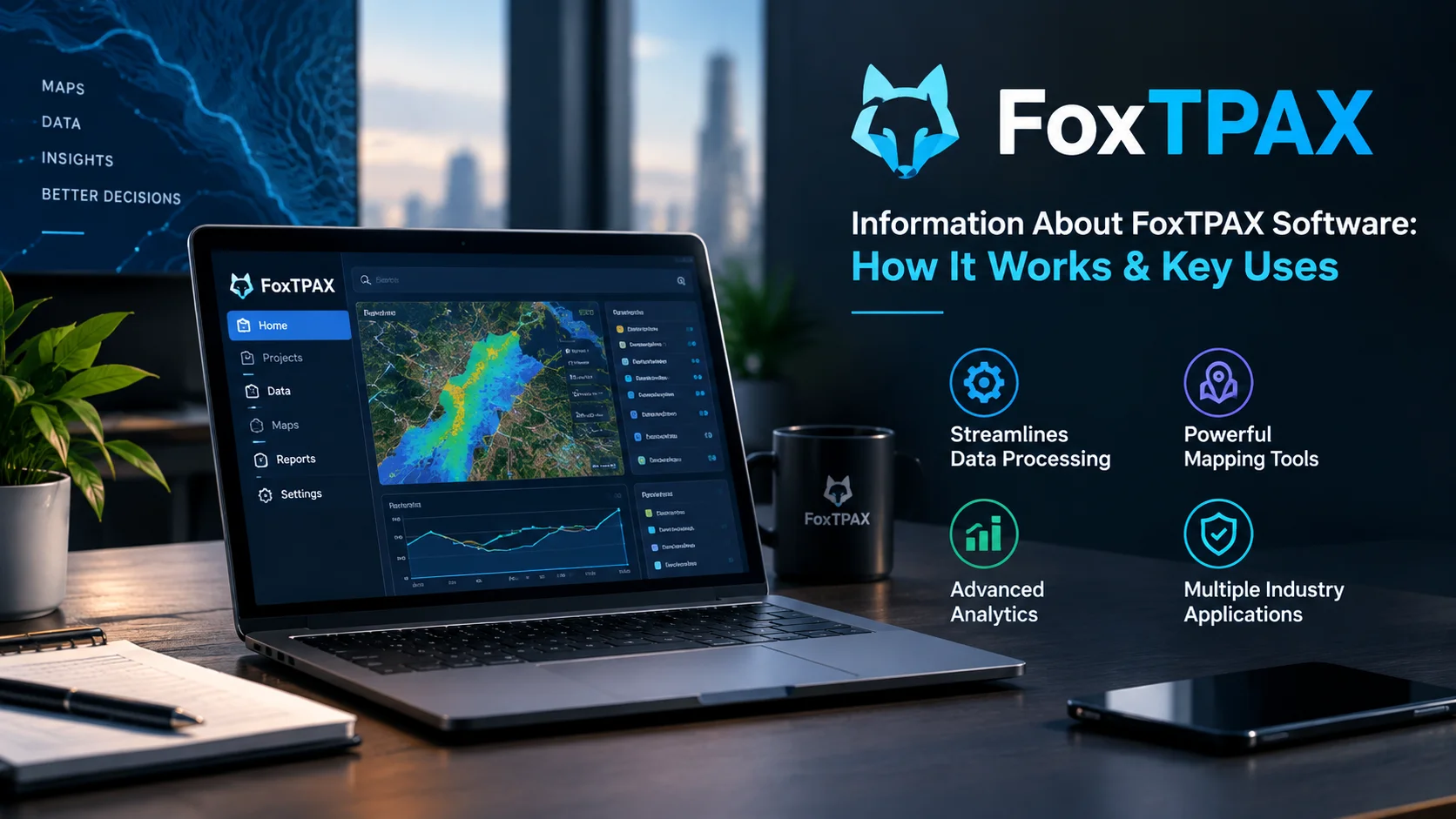
That is where FoxTPAX software comes in. It acts like a single digital superhero toolbox that puts all your tasks, data, and daily operations under one roof.
At Software Cora, we believe business tech shouldn’t feel like rocket science. In this guide, we will break down information about FoxTPAX software, what it is, how it works, why Python developers love it, and how it compares to other automation tools in plain, grade-school English.
What Is FoxTPAX Software Used For?
At its core, FoxTPAX software is a centralized business management and data intelligence platform. It collects information from various places in your company, cleans it up, and gives you a single screen (a dashboard) to manage everything.
Instead of jumping between ten open browser tabs, teams can use FoxTPAX to:
- Workflow Automation: Automatically assigning tasks, sending client emails, or triggering invoices when a job is done.
- Centralized Data Intelligence: Gathering numbers from sales, marketing, and support into one visual dashboard.
- Customer Relationship Management (CRM): Storing customer notes, past order histories, and message logs.
- Financial & Trading Operations: Managing order routing, trade records, and compliance tracking for specialized finance teams.
[ Separate Messy Apps ] [ FoxTPAX Central Engine ]
(Spreadsheets + Emails + Billing) ──► [ Single Unified Dashboard ] ──► (Automated Tasks)
How FoxTPAX Software Works
Understanding how FoxTPAX software works is simple if you break it down into four core steps:
[ Step 1: Input Layer ] ──► [ Step 2: Processing Layer ] ──► [ Step 3: Intelligence Layer ] ──► [ Step 4: Output Layer ]
(APIs & Data Fetching) (Cleaning & Deduplication) (AI Rules & Triggers) (Real-Time Dashboard)
Step 1: Data Collection (The Collector)
FoxTPAX connects directly to your existing business tools like email, accounting platforms, web forms, or custom databases using automated APIs and cloud connectors.
- Real-World Value: Instead of staff wasting hours manually copying data from emails into spreadsheets, FoxTPAX continuously pulls incoming records into one central hub in real time.
Step 2: Data Cleaning & Formatting (The Organizer)
Raw data from multiple tools is often messy, full of typos, or formatted differently. The processing layer cleans and standardizes this incoming information before it touches your database.
- Real-World Value: It automatically deletes duplicate customer entries, fixes misaligned phone numbers or addresses, and converts currency values into a single format. This ensures your team is always working with clean, accurate records.
Step 3: Smart Processing & AI Logic (The Brain)
Once the data is clean, the AI-driven business logic engine evaluates the information against custom rules you set up.
- Real-World Value: If a new sales order comes in, FoxTPAX automatically triggers the following steps: it generates an invoice, updates inventory counts, and emails a shipping notification to the warehouse, all without a human needing to click a button.
Step 4: Real-Time Visual Dashboard (The Display)
The output layer converts complex datasets into an interactive, visual command centre for managers and business owners.
- Real-World Value: You get live charts showing real-time sales figures, open support tickets, and team progress. You don’t have to wait until the end of the month to run reports; everything you need to make fast business decisions is visible in one clean view.
Step-by-Step Overview
| Workflow Step | What FoxTPAX Does Behind the Scenes | How It Helps Your Business |
| 1. Collection | Auto-syncs with email, CRM, and accounting apps via APIs. | Eliminates manual data entry and tab-switching. |
| 2. Cleaning | Removes duplicate records and fixes typos/formatting. | Keeps database records accurate and error-free. |
| 3. Processing | Evaluates rules and triggers automated workflow actions. | Speeds up task execution (billing, shipping, alerts). |
| 4. Display | Renders live data into charts, graphs, and task lists. | Gives managers instant visibility without writing manual reports. |
What Is FoxTPAX Software Python?
If you hear developers talking about FoxTPAX software Python, they are referring to using the Python programming language alongside FoxTPAX’s application programming interfaces (APIs) and software development kits (SDKs).
Think of FoxTPAX as a powerful, smart engine sitting inside a car. Python acts as the custom steering wheel and gear shift that lets your developers control, customize, and steer that engine to do exactly what your business needs.
Because Python code is clean, readable, and simple to learn, non-technical team members and developers can quickly write custom scripts to automate tasks without rewriting the core FoxTPAX system.
[ External Data / Tool ] ──► [ Python Custom Script ] ──► [ FoxTPAX API Connector ] ──► [ Central Dashboard ]
Key Types of FoxTPAX Software Python Integrations
When setting up FoxTPAX using Python, developers usually work with three main types of scripts:
1. Data Scraping & Web Extraction Scripts (The External Data Gatherers)
Small Python scripts fetch external information like market prices, competitor news, supplier inventories, or lead lists and feed it directly into your FoxTPAX database.
- Real-World Value: Instead of an employee manually searching websites and typing numbers into spreadsheets every morning, a Python scraper grabs the data while you sleep and loads it straight into FoxTPAX.
2. Custom API Connectors (The Software Bridges)
Custom Python libraries act as bridges between FoxTPAX and your internal legacy tools, local databases, or specialized web platforms.
- Real-World Value: If you use a custom or older accounting program that FoxTPAX doesn’t support out of the box, a developer can write a quick Python API script to connect the two systems seamlessly.
3. Automated Logic Triggers & Workflows (Decision Rules)
These Python scripts execute conditional actions based on specific “if/then” events occurring within FoxTPAX.
- Real-World Value: You can set rules such as: “If a customer spends over $1,000, run a Python script to calculate a custom bulk discount, generate a PDF receipt, and alert the sales manager via Slack.”
Why Developers Prefer Python for FoxTPAX Integrations
| Features | Why Python Makes FoxTPAX Better | Real Business Impact |
| Fast Development | Python requires fewer lines of code than Java or C++. | Custom software builds take days instead of months. |
| Rich Ecosystem | Access to thousands of pre-built tools (Pandas, Requests, AI libraries). | Easy to build predictive analytics and data cleaning scripts. |
| Simple Maintenance | Easy-to-read code that any developer can understand and update. | Lower ongoing IT maintenance costs and fewer bugs. |
Why FoxTPAX Software Should Be Free (Or Have a Generous Free Tier)
A popular question among small business owners and indie creators is why FoxTPAX software should be free.
While enterprise-level software usually costs money for hosting and support, there are strong reasons why a free tier or open-source option benefits everyone:
- Lower Barriers for Small Businesses: Micro-businesses and startups cannot always afford expensive monthly software subscriptions when just starting.
- Faster Adoption by Developers: When software tools offer a free tier (especially for Python developers testing APIs), more people build integrations and plugins for it.
- Premium Growth Model: Giving basic workflow automation away for free lets companies test the tool. As the business grows, they naturally upgrade to paid plans for advanced security and higher storage limits.
Related Automation Concepts: Foxtrot RPA, Nintex Foxtrot & Triple Foxtrot Ops LLC
When researching information about FoxTPAX software, you might run into similar-sounding software names and industry terms. It is important not to get them confused:
1. Foxtrot RPA & Nintex Foxtrot
Nintex Foxtrot (formerly known simply as Foxtrot RPA) is a well-known Robotic Process Automation (RPA) tool.
- How it differs: While FoxTPAX acts as a central operational dashboard and data intelligence platform, Nintex Foxtrot focuses on creating “bots” that mimic human clicks and keystrokes to automate repetitive desktop tasks.
2. Triple Foxtrot Ops LLC
Triple Foxtrot Ops LLC is an independent business entity/consulting agency and is not the core FoxTPAX software engine itself. Companies like this often provide operational support, logistics, or tech consulting services.
FoxTPAX Software vs. Traditional Enterprise Systems
Here is how modern integrated software like FoxTPAX compares to older, traditional management tools:
| Feature Area | Legacy Business Apps | FoxTPAX Software Platform |
| Setup Time | 6 to 12 months (slow & complex) | 8 to 16 weeks (fast deployment) |
| User Interface | Cluttered, confusing menus | Clean, unified dashboard |
| Automation | Requires manual data entry | Trigger-based rules & Python API sync |
| Data Cleanup | High risk of duplicate files | Automated deduplication & formatting |
Frequently Asked Questions (FAQs)
What is FoxTPAX software used for?
FoxTPAX software is used to centralize business operations. It combines task management, customer record tracking (CRM), workflow automation, and financial reporting into a single digital dashboard.
How does FoxTPAX software work?
It collects raw data from your business tools, cleans up duplicates and typos, uses smart logic to process tasks, and displays simple visual updates on a central dashboard.
What is FoxTPAX software Python?
It refers to using Python code, scripts, and REST APIs to customize FoxTPAX. Python allows developers to build custom data collectors and automate unique business workflows.
Is FoxTPAX software the same as Nintex Foxtrot?
No. Nintex Foxtrot (Foxtrot RPA) is a specific robotic process automation tool focused on desktop bot clicks, whereas FoxtPAX is a broader business management and data dashboard system.
Simplify Your Business Tools with Software Cora
Choosing the right digital management tools removes daily headaches, stops wasted work, and helps your team stay organized.
At Software Cora, we cut through complicated tech jargon to bring you practical guides, software breakdowns, and easy-to-understand reviews.
Want to Share Your Tech & Software Insights?
Have expertise in automation, SaaS, software development, or business tools? Software Cora is always looking for guest writers, tech enthusiasts, and software reviewers to join our contributor community.
Share your well-researched, practical articles with our growing audience. Check out our submission guidelines and send us your pitch on our Write for Us page!
